Helping patients understand their options
An informed decision is the best decision
Healthcare providers play a critical role in helping their patients understand the available options for their newborn's umbilical cord. As an industry leader for 30 years and part of a global healthcare company, Revvity, ViaCord offers families: confidence and trust, proven quality and innovation.
See why families choose ViaCord
Collection Instructions [PDF]
Cord Blood and Cord Tissue Collection Instructions for Labor & Delivery
View Collection Instructions
Our Treatment Experience
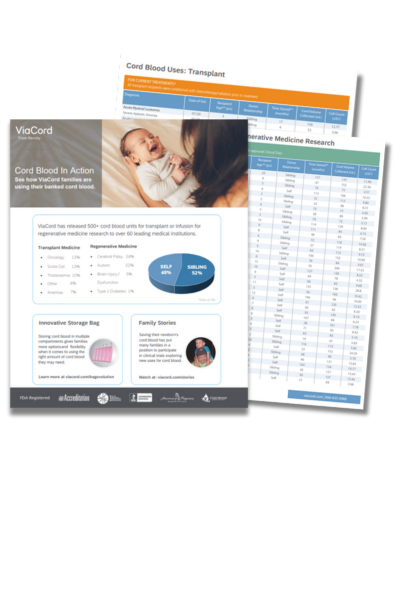
Over 500 ViaCord Families Have Used Their Cord Blood
When families save their baby's cord blood they’re planning for the future. Already, more than 500 ViaCord families have used their cord blood in a transplant or regenerative medicine research for conditions like autism and cerebral palsy. These families are fortunate they had cord blood as an option and we’re proud to have helped.
View Detailed Summary
Check Our The Latest Issue Of ViaConnect
Our e-newsletter for Medical Professionals